
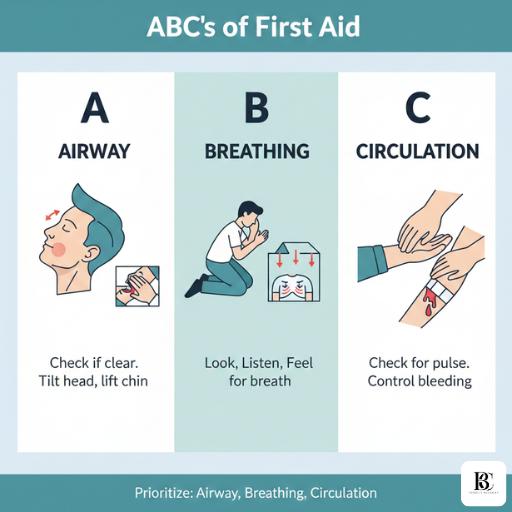
The ABCs of first aid are a life-saving method used to assess and treat emergencies in the correct order. They help responders focus on the most critical problems first to keep a person alive until medical help arrives.
The ABCs of First Aid Are:
- A – Airway
- B – Breathing
- C – Circulation
This system is used worldwide by first aiders, paramedics, and healthcare professionals.
What Does A Mean in the ABCs of First Aid?
A – Airway
The airway must be open and clear for oxygen to reach the lungs.
How to check the airway:
- Is the person conscious?
- Can they talk or make noise?
- Is the mouth or throat blocked?
What to do:
- Tilt the head back and lift the chin
- Remove visible obstructions if safe
- Do not insert fingers blindly into the mouth
➡️ A blocked airway can cause death within minutes, making this the first and most important step.
What Does B Mean in the ABCs of First Aid?
B – Breathing
After opening the airway, check if the person is breathing normally.
How to check breathing:
- Look for chest rise
- Listen for breath sounds
- Feel for air on your cheek
(Do this for no more than 10 seconds.)
What to do:
- If breathing normally, place the person in the recovery position
- If not breathing, begin CPR or rescue breaths (if trained)
- Call emergency services immediately
➡️ Breathing supplies oxygen to the brain and vital organs.
What Does C Mean in the ABCs of First Aid?
C – Circulation
Circulation ensures blood is flowing and severe bleeding is controlled.
How to check circulation:
- Look for heavy bleeding
- Check skin color and temperature
- Watch for signs of shock
What to do:
- Apply firm pressure to stop bleeding
- Elevate the wound if possible
- Keep the person warm
- Begin chest compressions if there is no pulse (if trained)
➡️ Severe blood loss can be fatal even if the person is breathing.
ABCs of First Aid (Quick Answer for Featured Snippets)
The ABCs of first aid stand for Airway, Breathing, and Circulation.
They are used to assess and treat life-threatening conditions in emergencies by ensuring the airway is open, the person is breathing, and blood is circulating properly.
Why Are the ABCs of First Aid Important?
The ABC approach:
- Prevents panic during emergencies
- Prioritizes life-threatening conditions
- Is the foundation of CPR and emergency care
- Helps save lives before professional help arrives
When Should You Use the ABCs of First Aid?
Use the ABCs in situations such as:
- Unconsciousness
- Cardiac arrest
- Choking
- Drowning
- Severe injuries
- Road accidents
- Workplace emergencies
FAQ – People Also Ask
What are the ABCs of first aid used for?
They are used to assess and manage medical emergencies by addressing the most critical life-threatening issues first.
Are the ABCs of first aid still used today?
Yes. The ABC method is still widely taught in first aid and CPR training worldwide.
What comes first: airway or breathing?
Airway always comes first, because breathing cannot occur if the airway is blocked.
Can anyone use the ABCs of first aid?
Yes. The ABCs are designed to be simple enough for anyone to use, even without medical training.
Final Thoughts
Knowing what the ABCs of first aid are can help you stay calm, focused, and effective during emergencies. These three steps—Airway, Breathing, and Circulation—form the foundation of lifesaving care and can make the difference between life and death.
👉 Consider taking a certified first aid or CPR course to practice these skills hands-on — for example, you can train locally at Brampton First Aid CPR, First Aid 4U Training Brampton, or Coast2Coast First Aid/CPR – Brampton, which offer WSIB-approved, hands-on first aid and CPR certification courses taught by experienced instructors.